
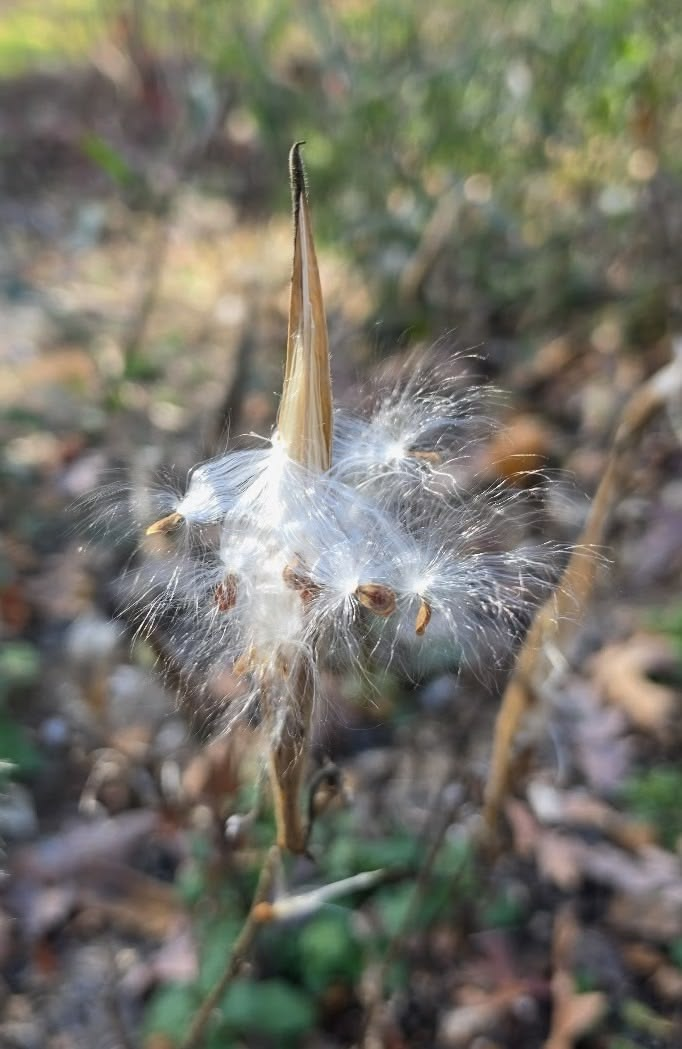
The garden looks finished for the year, but the best pollinator gardens start right now, with a cup of tea and a notebook.
Winter is the gardener’s planning season. The beds are quiet, the seed catalogs are arriving, and you can see the bones of your yard clearly: where the sun falls, where water collects, where the bare spots are. Decisions made in December and January are what turn into a yard full of bees and butterflies come July.
And your garden isn’t as empty as it looks. Many of our native bees are sleeping inside hollow stems and under fallen leaves right now. How you care for your yard this winter matters to them as much as what you plant in spring.
Five things to do this winter
1. Leave the leaves and the stems. Skip the big fall cleanup. Leaf litter shelters overwintering insects, while standing plant stems provide nesting habitat for native bees. Leave stems through winter, and if you tidy in spring, retain sections of old stalks at varying heights. Delay removing leaf litter until spring is well underway.
2. Map your yard. Sketch your property and mark sun and shade, wet and dry spots, and what’s already growing. Pollinator plants are happiest in the conditions they evolved for, so this map tells you what to buy.
3. Plan for bloom from April to October. Pollinators need food all season, not just in June. Aim for at least three plants that bloom in each of spring, summer and fall. My free plant list below is organized by season to make this easy.
4. Choose natives, and plant them in groups. Native plants feed native insects, and many caterpillars can only eat specific native host plants. Plant in clumps of three or more of the same thing so bees can find them and forage efficiently.
5. Try winter sowing. Many native seeds, like milkweed and asters, need a cold, moist period before they’ll sprout. Sow them in clear containers outdoors in January or February and let winter do the work.
Get your free plant list
To help you start planning, I’ve put together a free Pollinator Plant List for Connecticut Gardens: native flowers, shrubs and trees organized by bloom season, with sun and soil needs for each. Sign up for the Onyx & Owl newsletter and it’s yours.
The newsletter is free and arrives about once a month, with seasonal garden tips, nature notes and first word on new classes.
See you in the garden, Christine

Leave a Reply